
Whose name goes first on a wedding invitation? The traditional answer: the bride's name. The honest answer: whoever you want, and nobody at your wedding will check.
The rule dates back to a time when the bride's parents hosted and paid for the whole celebration, so their daughter's name led the invitation. That world is mostly gone. According to The Knot's Real Weddings Study, only 13% of couples have their wedding fully paid for by others, and half pay for most of it themselves.
This guide covers the full question, because it splits into four smaller ones: your own names on the card, the envelopes for your guests, your monogram initials, and keeping everything consistent from save-the-date to thank-you card.
The short answer
The bride's name traditionally comes first, followed by the groom's. Etiquette authorities from Emily Post to The Knot agree on that baseline. They also agree on something else: it stopped being a binding rule years ago.
The Knot puts it plainly in its invitation etiquette guide: the bride-first order is "not a hard-and-fast rule and couples should feel empowered to order the names as they best see fit."
So if you follow tradition, you're correct. If you flip it, you're also correct. The rest of this article explains where the tradition came from, when a different order genuinely makes sense, and how to settle the question when neither of you is a bride, both of you are, or someone in the family has strong opinions.
Good to Know
The original rule was about hosting, not gender. The invitation was issued by the hosts, historically the bride's parents, who invited guests to the marriage of "their daughter." Her name came first because her family was throwing the party.
Why the bride's name traditionally goes first
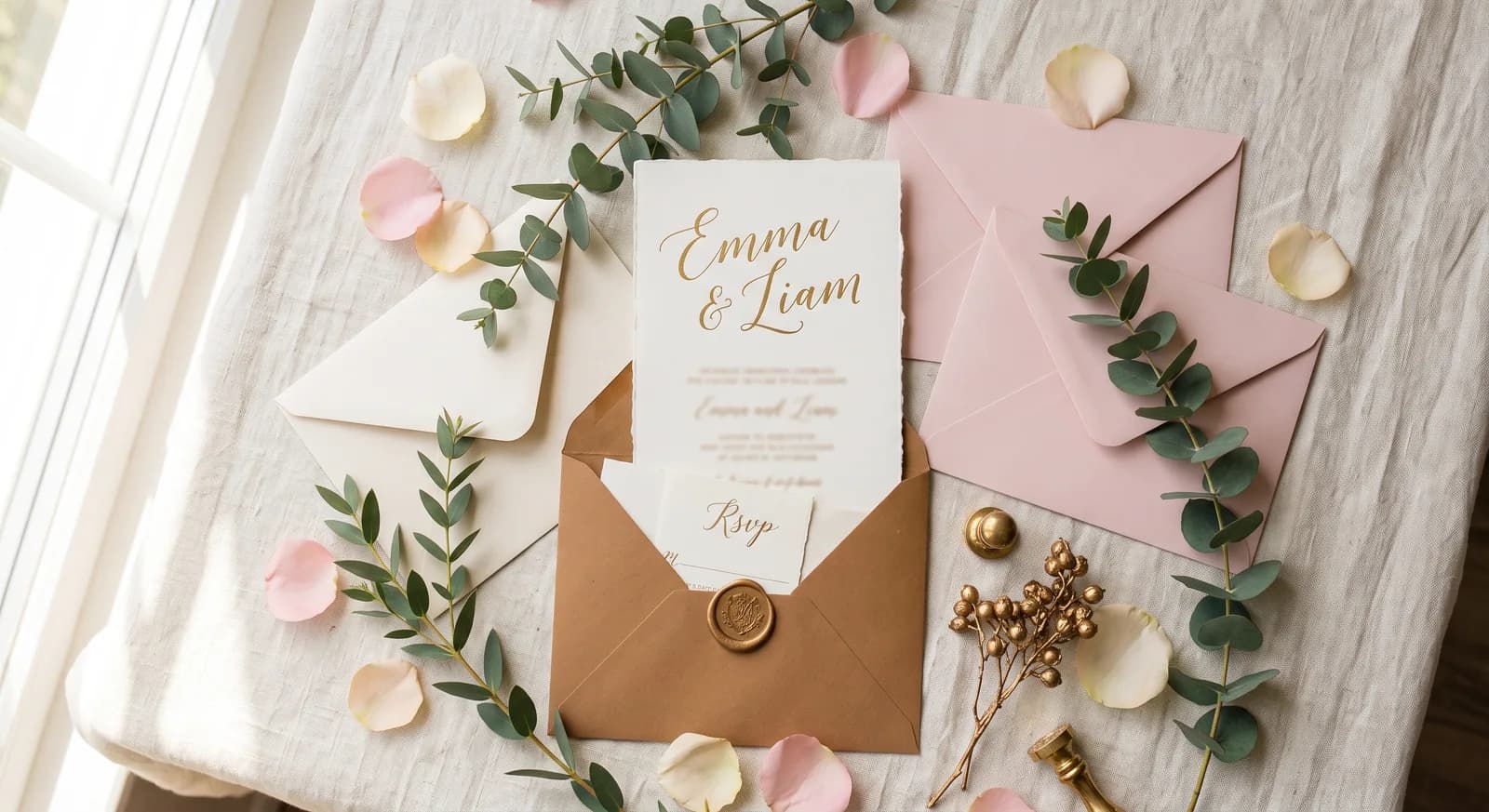
Formal wedding invitations were once announcements from the hosts. The bride's parents paid for the venue, the food, and the stationery, so the invitation spoke in their voice: "Mr. and Mrs. Charles Wright request the honour of your presence at the marriage of their daughter Emily Anne to Mr. Daniel Foster."
Two details of that classic format still surprise couples today. The bride appears with first and middle name only, because she shares her parents' surname and repeating it would be redundant. The groom gets his full name with title, because guests from the bride's side might not know him.
The money has moved, though. In The Knot's study of over 10,000 US couples, most now pay for at least half of their own wedding. When you and your partner are the hosts, the hosting logic points at both of you equally. There is no etiquette basis left for insisting on one order.
That's why every major authority has softened its stance. Tradition remains the default because people recognize it, not because it's required.
When a different order makes sense
If the groom's family hosts
Many wedding blogs get this one wrong. When the groom's parents host, strict formal etiquette does not flip the couple's names. Emily Post's own sample wording reads: "Mr. and Mrs. Antonio Diaz request the honour of your presence at the marriage of Ms. Latoya Kenisha Armond to their son Mr. Carlos Delapaz Diaz."
The bride still comes first. What changes is the relationship phrase: "their son" instead of "their daughter." Some stationers do flip the order in this situation, and no one will call it an error. But if you want the by-the-book version, the host line moves and the bride's position doesn't.
Cultural traditions where the order flips
The bride-first convention is Western, not universal. On traditional Chinese wedding invitations, the groom's family hosts, so the groom's name and his parents are listed first.
Jewish invitations often name both sets of parents, reflecting that both families host together. Zola's guide to Jewish wedding invitations notes another lovely detail: couples are joined with "and" rather than the traditional "to," because "to" carries the old sense of a bride being given to a groom.
If your families bring different traditions to the table, the invitation is one of the first places they meet. Talk about it early. A quick conversation now beats a wounded phone call after the envelopes go out.
Same-sex couples and modern couples: how to decide
Two brides, two grooms, or simply two people who find "the bride goes first" unhelpful: you need a tie-breaker, not a tradition. Zola's LGBTQ+ invitation guide calls the bride-first rule a heteronormative tradition "best forgotten" and recommends alphabetical order instead.
In practice, couples use one of these methods:
- Alphabetical by first name. Neutral, defensible, and instantly settled. This is the closest thing to an official convention for same-sex couples.
- Whatever sounds best aloud. Read both versions out loud. "Rachel and Tom" flows differently than "Tom and Rachel." Most couples find one version simply sounds right.
- The host's child first. If one set of parents is hosting and named on the invitation, their child's name follows naturally.
What you won't find in any etiquette guide: "whoever proposed goes first." That one is forum folklore. Charming, but it carries no weight if anyone questions your choice.
Pro Tip
Test the order in your invitation wording before you commit. Amovera's free invitation wording generator lets you preview both name orders in different wording styles in seconds.
Whose name goes first when you address the envelopes
This is the second half of the question, and the part with more actual rules. Once your own names are settled, you face a stack of envelopes for guests, and every couple on your list needs an order too.
Married couples
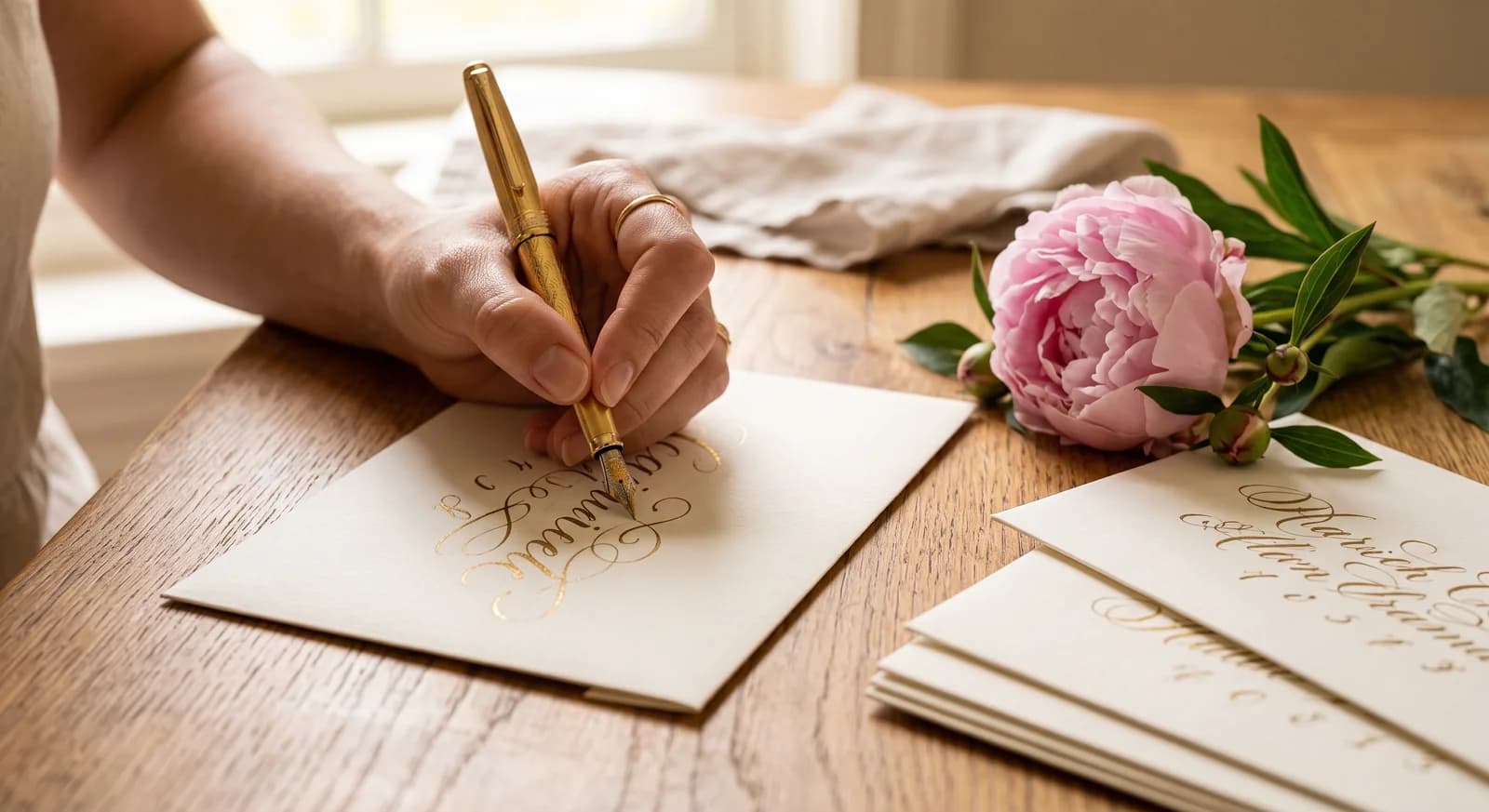
The traditional format is "Mr. and Mrs. James Darling," using his full name. Emily Post still lists it as the formal standard. Plenty of guests now find it dated, since the wife's name disappears entirely.
The modern alternative names both people: "Ms. Sarah Darling and Mr. James Darling." For married couples with different surnames, both names always appear, and either can go first. The Knot suggests leading with the person you're closer to, or going alphabetical.
Unmarried couples
An unmarried couple living together gets both names on one line: "Ms. Nancy Fellows and Mr. Scott Dunn." Under older etiquette the woman's name leads here, which amuses people who notice the asymmetry with married couples. Modern guidance again says: closeness or alphabet, your call.
When someone has a title
One rule survives across every etiquette source, traditional and modern alike: a professional title outranks the default order. If she's a doctor and he isn't, the envelope reads "Dr. Anne Barker and Mr. Peter Underwood."
The Knot's addressing guide applies the same logic to military ranks, judges, and reverends. If both hold the same title, "The Drs. Werner" or "Drs. Barbara and Robert Werner" both work.
Zola adds a tie-breaker: when ranks are equal, tradition puts the woman first.
Families with children
Children don't appear on the outer envelope. If you're using double envelopes, their names go on a line below their parents on the inner envelope only. No inner envelope? List the children under the parents on the single envelope, oldest first.
The quiet power of this rule: an envelope addressed only to the parents means the kids aren't invited. You never have to print "adults only" anywhere. Anyone over 18 gets their own invitation, even if they still live at home.
Important
The title rule is the one guests actually notice. Addressing an envelope to "Mr. and Mrs. Peter Underwood" when Anne spent seven years earning her doctorate lands badly. When in doubt, check LinkedIn before you print.
Keeping track of names, titles, and who's invited with whom gets messy fast in a spreadsheet. A guest list tool that stores each household's exact envelope name saves you from addressing anything twice.
Pick an order once, then stay consistent
Whichever order you choose, the real etiquette rule of 2026 is consistency. Save-the-date, invitation, wedding website, welcome sign, thank-you cards: same order everywhere. With Joy's save-the-date guide makes the same point: your save-the-date wording should align with your formal invitation.
Guests do notice when the save-the-date says "Emma and Liam" and the invitation says "Liam and Emma." Most won't say anything. Someone's aunt will.
For your wedding website and thank-you cards, no authority prescribes an order at all. The answer is the same: match your invitation.
"And" or "to": the small word between your names
The word joining your names carries more history than the order does. Traditional formal wording announces the marriage of the bride "to" the groom, a leftover from the era when a daughter was formally given to her husband's family.
Modern couples, and Jewish wedding invitations by long tradition, join the names with "and" instead. "Emily and Daniel" reads as two people getting married. "Emily to Daniel" reads as a transfer. If equality in the wording matters to you, this one word does more work than the name order ever will.
Monograms follow their own tradition
Joint monograms have a separate rule that trips couples up. In the classic three-letter format, the woman's first initial goes on the left, the shared surname initial sits large in the middle, and the man's initial goes right. Sarah and John Smith become SJS. The Knot's monogram guide confirms the format, and adds a timing rule: a married monogram with a shared surname initial shouldn't appear until you're actually married.
There's even a counter-tradition. Some monogram guides put the man's initial first, citing the old rule that a man's first name and surname shouldn't be separated. Pick either logic; just don't expect anyone to enforce it.
So the invitation suite itself shouldn't carry your married monogram. A two-letter version with both first initials works fine before the ceremony. Save the full three-letter monogram for dinner menus, napkins, and everything after "I do." You can design and preview yours with Amovera's free wedding monogram generator.
One quiet irony: on invitations, tradition puts the bride first because her family hosted. On monograms, she's first because of "ladies first." Different logic, same outcome, and neither binds you.
FAQ
Is it wrong to put the groom's name first?
No. Tradition favors the bride's name first, but The Knot, Zola, and Emily Post all treat the order as the couple's choice today. If his name sounds better first or matches your design, use it. Just use it everywhere.
Do our save-the-dates and invitations need the same name order?
Yes, keep them identical. There's no penalty from the etiquette police, but mismatched stationery looks like a mistake rather than a choice. If your save-the-dates already went out, match their order going forward.
Whose name goes first for two brides or two grooms?
Alphabetical order by first name is the most common convention, recommended by Zola among others. Many couples simply pick the order that sounds better read aloud. Both are fully accepted.
What if one of us has a professional title?
On your own invitation, titles are optional and many couples drop them for warmth. On guest envelopes, the titled person goes first regardless of gender: "Dr. Anne Barker and Mr. Peter Underwood."
Does the order change after the wedding?
No. Whatever order you chose carries into thank-you cards and beyond. The one thing that does change: you can finally use that three-letter married monogram.
Your names, your order. Settle it once, write it down, and spend the reclaimed energy on decisions guests will actually remember, like the food.
One place for every name on your list
Amovera keeps your guest list, envelope names, and RSVPs organized so nothing gets addressed twice.
Get Started